Planning financially for your child’s future education is one of the most meaningful forms of preparation a parent can provide.
As part of Shaping the Future Through Education 2026, U Zaw Moe Aung, Deputy CEO of MAB Bank, shared valuable insights under the topic “Planning for Your Child’s Education – A Long-Term Financial Perspective.” His session covered important considerations for parents and guardians, including setting educational goals, estimating future education costs, building regular savings habits, and preparing for unexpected financial challenges.
For parents and guardians who were unable to attend the session, we are pleased to share these key insights as a practical reference.
Start Early. Save Systematically. Review Regularly.
A small financial planning step taken today can help create a stronger foundation for your child’s educational future.
The key is not to wait until the time comes to pay for university or other major educational expenses. Instead, parents can begin by setting clear goals early and developing a structured financial plan based on their circumstances.
It is important for parents to consider what type of education they hope to provide for their children. Will they study locally or abroad? What type of school or educational institution would be most suitable? Having a clearer educational goal from an early stage can help families better understand and prepare for the financial resources that may be required.
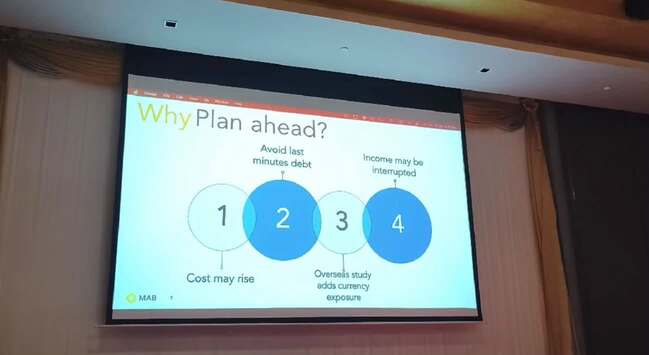
Why Should You Plan Early?
Education costs may change as children grow older. For families considering overseas education, foreign exchange fluctuations may also need to be taken into account.
At the same time, family income may not always remain stable. Without adequate preparation, families may face financial pressure when children approach university age and may have to rely on emergency borrowing or other unplanned financial solutions.
Early planning can help families prepare for these uncertainties more effectively.
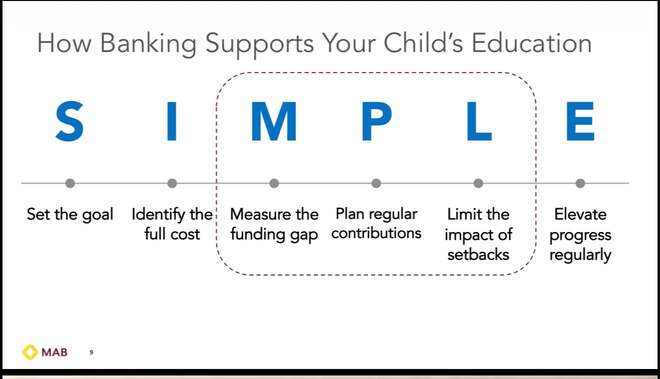
A SIMPLE Plan for Parents
S – Set the Goal
Define your child’s educational goals and the timeframe required to achieve them.
I – Identify the Full Cost
Consider not only tuition fees, but also accommodation, books and learning materials, transportation, living expenses, and other potential costs.
M – Measure the Funding Gap
Calculate the difference between what you can currently set aside and what may be required in the future.
P – Plan Regular Contributions
Rather than waiting to save a large amount at once, establish a regular contribution that is realistic and manageable for your family.
L – Limit the Impact of Setbacks
Prepare for unexpected circumstances, such as reduced income or emergency expenses, so that your child’s education fund is less affected by financial setbacks.
E – Evaluate Progress Regularly
Review your educational goals, estimated costs, and savings progress annually or at regular intervals, and make adjustments when necessary.
Planning According to Your Child’s Age
From Birth to the Early Years
With a longer timeframe ahead, families may be able to begin with smaller, regular contributions and gradually build their education fund.
Primary School Years
As your child’s interests and educational direction become clearer, review the educational goals and adjust the savings plan as needed.
Middle and High School Years
As future education pathways become more defined, families can reduce uncertainty by preparing the funds that may be needed for the next stage of education.
Before University
Focus on protecting the funds that have been accumulated and make timely preparations for tuition and other education-related expenses.
Five Things Parents Should Remember
Keep your education fund separate from everyday household expenses.
Establish a consistent and systematic savings habit.
Avoid using money set aside for education for unnecessary expenses.
Regularly review factors such as inflation, exchange rates, and changes in family income.
If your child’s educational goals change, review and adjust the financial plan accordingly.
Key Takeaways
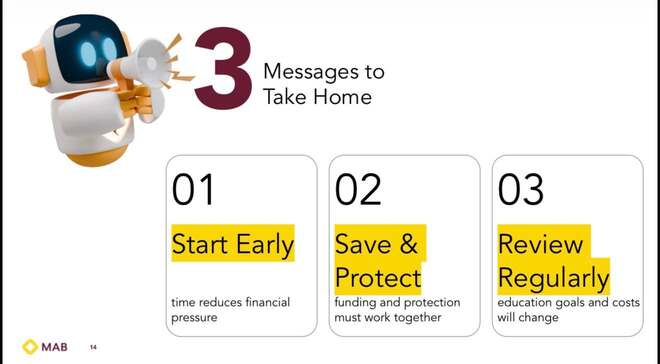
Start Early.
Time can help reduce the financial pressure associated with future education costs.
Don’t Just Save—Prepare for the Unexpected.
Effective education financial planning involves not only saving, but also preparing for unexpected circumstances that may affect the plan.
Review Regularly.
Your child’s educational goals and the associated costs may change over time. A financial plan should therefore be reviewed and adjusted regularly.
Shaping the Future — Shaping Better Lives.
Rotary Club of Metro Yangon would like to express our sincere appreciation to U Zaw Moe Aung, Deputy CEO of MAB Bank, for sharing his valuable knowledge and practical insights on planning for a child’s future education.
His contribution to Shaping the Future Through Education 2026 has provided parents and guardians with meaningful perspectives on preparing today for the educational opportunities of tomorrow.
Record Photo